
When depression does not lift, the choice is often framed as pills versus brain stimulation. In practice, the two are not rivals. Antidepressants are usually the first step, TMS is usually considered when they have not given enough relief, and many patients use both.
This post compares them on the points that matter most: how they work, how well, with what side effects, and at what cost in time and money.
How Each Works
Antidepressants are daily medications that act throughout the brain and body. Most take several weeks to reach full effect.
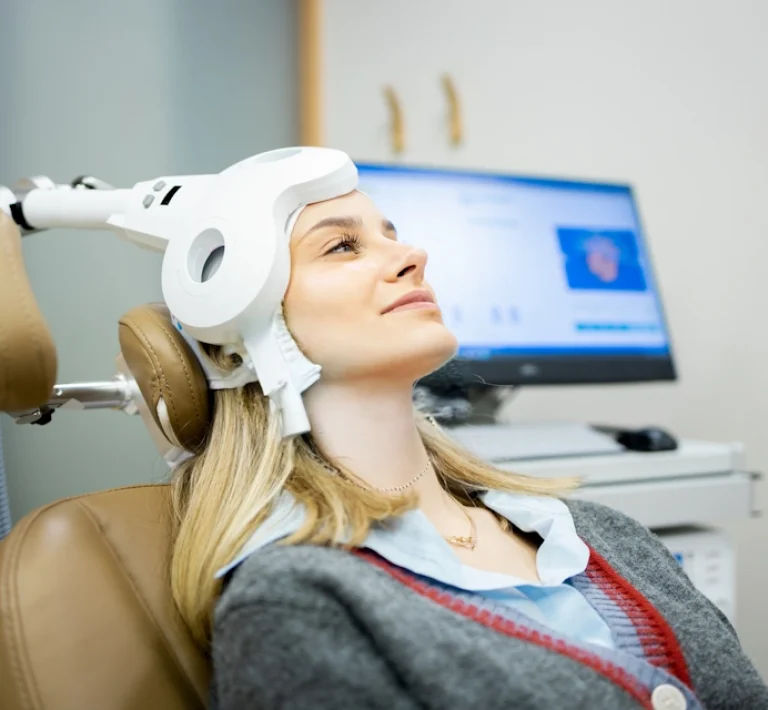
TMS uses magnetic pulses delivered through a coil on your scalp to stimulate the left prefrontal cortex, a region involved in mood regulation. It does not enter your bloodstream and involves no medication.
Where Each Fits
Medication is usually the first step, and it helps many people. TMS is typically considered when one or more antidepressants have not given enough relief, or when side effects limit what you can tolerate. Insurers generally require documented medication trials before covering TMS.
What the Evidence Shows
- Each medication step helps less. In the large STAR*D study, the chance of remission fell with each additional medication step, which is why patients who have tried several drugs look for a different kind of treatment.
- Real-world TMS results. A registry covering 103 practice sites reported response rates of 58% to 83% and remission rates of 28% to 62%, depending on the rating scale used. Treatment was open-label and the registry was supported by a manufacturer, so these figures overstate what a controlled trial would show.
- A head-to-head comparison. A 2024 randomized comparison from the Netherlands tested TMS against continued medication strategies in patients who had not responded to at least two antidepressants. Response was 37.5% with TMS versus 14.6%, and remission was 27.1% versus 4.9%.
Comparing across studies is unreliable, and TMS does not work for everyone. But for people who have not responded to medication, the evidence supports TMS as a meaningful option.
For patients who have not responded to at least two antidepressants, a 2024 randomized comparison found higher response (37.5% vs. 14.6%) and remission (27.1% vs. 4.9%) with TMS than with continued medication strategies. TMS does not work for everyone.
Yes, for many patients. TMS is typically considered after medication has not given enough relief, and real-world registry data show meaningful response and remission rates, though those data are open-label and manufacturer-supported.
A registry covering 103 practice sites reported response rates of 58% to 83% and remission rates of 28% to 62%, depending on the rating scale. Controlled trials generally show lower rates.
TMS is generally well tolerated, with scalp discomfort and light headache as the most common side effects. Seizure is a rare risk, and metal implants in or near the head are a concern, so screening is important.
Side Effects
Antidepressants can cause nausea, sleep changes, weight gain, sexual side effects, and emotional blunting, and stopping suddenly can cause discontinuation symptoms.
TMS does not enter the bloodstream, so it does not cause those effects. Common side effects are scalp discomfort and a light headache early in treatment. Seizure is a rare but recognized risk, which is why screening for seizure history and metal implants matters.
Time and Convenience
An antidepressant is a pill at home. A standard TMS course is about 36 sessions over roughly seven weeks, with no recovery time afterward. One-Day TMS compresses treatment into a single day for patients who cannot commit to that schedule. It is typically not covered by insurance and is FSA and HSA eligible.
How Long Results Last
Antidepressants work only while you take them. TMS benefit lasts for many people, and a naturalistic follow-up study found benefit up to a year in many patients who responded. Maintenance medication and repeat TMS sessions were part of that picture, and some patients need booster sessions when symptoms return.
Can You Do Both?
Often, yes. TMS is commonly delivered alongside medication. Never stop an antidepressant on your own, because stopping suddenly can cause withdrawal symptoms and relapse. If medication selection has been trial and error, GeneSight testing can help identify better-matched options.
Often yes. TMS is commonly delivered alongside medication. Your psychiatrist will review your medications and advise you.
Not on your own. Stopping suddenly can cause withdrawal symptoms and relapse. Any change should be planned with your psychiatrist.
Standard TMS is covered by most insurance plans in Florida for patients who meet treatment criteria. One-Day TMS is typically not covered and is FSA and HSA eligible.
A standard TMS course is about 36 sessions over roughly seven weeks. Antidepressants are taken daily, and many take several weeks to reach full effect.
At a Glance
| Factor | Antidepressants | TMS |
|---|---|---|
| How it works | Daily medication | Magnetic pulses to the prefrontal cortex |
| Typical use | First-line | After medication has not helped |
| Time to benefit | Weeks | Gradual over the course |
| Side effects | Systemic, varies by drug | Mostly scalp discomfort, headache |
| Commitment | Daily pill | About 36 sessions over roughly seven weeks |
| Insurance | Almost always covered | Standard TMS covered by most plans for eligible patients |
Cost and Insurance
Standard TMS is covered by most insurance plans in Florida for patients who meet treatment criteria. Our team verifies your benefits and handles authorization before treatment.
| Where NeuPath Fits |
|---|
| NeuPath offers psychiatry and medication management, GeneSight testing, TMS, One-Day TMS, Spravato, and ketamine therapy in one practice. That means your plan can shift between medication and brain stimulation without you starting over somewhere new. |
| Schedule a free 15-minute discovery call at (561) 782-1702 |