
If you have been struggling with depression and antidepressants have not given you the relief you were hoping for, you are far from alone. Nearly one in three people with depression do not respond adequately to standard antidepressant medications. For many of those patients, the search for something that actually works leads them to a treatment they may not have heard of before: TMS therapy.
TMS, or Transcranial Magnetic Stimulation, is an FDA-approved, medication-free treatment for depression that uses gentle magnetic pulses to stimulate specific areas of the brain. It is non-invasive, well-tolerated, and backed by decades of clinical research. At NeuPath Mind Wellness in Delray Beach, TMS is one of our most effective tools for helping patients reclaim their mental health.
In this post, we will explain what TMS therapy is, how it works, what to expect from treatment, and how to know if it might be right for you.
| At a Glance | TMS Therapy |
|---|---|
| Full form | Transcranial Magnetic Stimulation |
| FDA approval | Approved for depression (1998), OCD (2018), anxious depression (2021) |
| Treatment type | Non-invasive, medication-free brain stimulation |
| Session length | 19 to 37 minutes (standard); as short as 3 minutes (accelerated) |
| Typical course | 20 to 36 sessions over 4 to 6 weeks |
| Common side effects | Mild scalp discomfort, light headache; typically resolves quickly |
| Insurance coverage | Often covered for treatment-resistant depression |
| Available at NeuPath | Delray Beach, Boca Raton, and Boynton Beach |
What Is TMS Therapy?
Transcranial Magnetic Stimulation is a brain stimulation therapy that uses magnetic fields to activate nerve cells in areas of the brain that regulate mood. The technology is similar in principle to an MRI machine, but the pulses are far more focused and are delivered to a specific target region.
The FDA first approved TMS for depression in 2008 and has since expanded its approval to include OCD, anxious depression, and smoking cessation. It is now used in thousands of clinics across the United States as a mainstream treatment for patients who have not responded to medication.
Unlike antidepressants, which work by altering brain chemistry through your bloodstream, TMS works directly at the level of the brain. It does not require anesthesia, does not involve any incisions, and has no systemic side effects. Most patients drive themselves to and from their sessions and return to their normal routine immediately afterward.
TMS is not a last resort. At NeuPath Mind Wellness, we view it as a first-line option for many patients, particularly those who want an effective, medication-free path to treating depression.
How Does TMS Therapy Work?
TMS works by targeting the left prefrontal cortex, the area of the brain most associated with mood regulation. In people with depression, this region tends to be underactive. TMS uses a coil placed gently against the scalp to deliver precisely controlled magnetic pulses that pass through the skull and stimulate the nerve cells in that area.
Think of it like jump-starting a part of the brain that has gone quiet. Each session delivers thousands of these pulses, and over the course of a full treatment course, the cumulative effect is a lasting improvement in neural activity and connectivity. This process is called neuroplasticity, and it is the same mechanism the brain uses to form habits, learn new skills, and recover from injury.
The Role of Neuroplasticity
Neuroplasticity is the brain’s ability to reorganize itself by forming new neural connections. TMS harnesses this ability by repeatedly stimulating dormant pathways until the brain learns to activate them on its own. This is why TMS takes a course of treatment to work rather than producing an immediate effect like a sedative might. The changes it creates are structural, not just chemical, which is one reason its results tend to be durable.
Research published in major psychiatric journals has confirmed that TMS produces measurable changes in brain connectivity and metabolism, particularly in the prefrontal cortex and its connections to the limbic system, which governs emotional response.
TMS vs. Standard Antidepressants: A Different Mechanism
Standard antidepressants like SSRIs and SNRIs work by altering the levels of neurotransmitters such as serotonin and norepinephrine across the entire brain and body. This is why they can take 4 to 6 weeks to show results and often come with side effects like weight gain, fatigue, and sexual dysfunction.
TMS bypasses the bloodstream entirely. It works locally and directly on the brain tissue without affecting the rest of the body. This means no systemic side effects, no waiting weeks for medication to build up, and no need to taper off when treatment ends. For patients who are sensitive to medications or who have struggled with side effects, this difference is significant.
What Conditions Does TMS Treat?
TMS was originally developed for depression, but research has expanded its application considerably. At NeuPath Mind Wellness, we use TMS to treat the following conditions:
- Major Depressive Disorder (MDD), including treatment-resistant cases
The most common application. TMS is particularly effective for patients who have tried two or more antidepressants without adequate relief.
- Anxious Depression
The FDA specifically approved a TMS protocol for depression with comorbid anxiety in 2021. Many patients experience both conditions simultaneously, and TMS can address both.
- Obsessive-Compulsive Disorder (OCD)
TMS received FDA clearance for OCD in 2018. A deep TMS protocol targeting the anterior cingulate cortex has shown strong results for patients whose OCD has not responded to medication.
- Post-Traumatic Stress Disorder (PTSD)
While TMS is not yet FDA-approved specifically for PTSD, clinical evidence and real-world results strongly support its use. Many patients at NeuPath experience meaningful reduction in PTSD symptoms through TMS, often in combination with other therapies.
- Anxiety Disorders
Generalized anxiety, social anxiety, and panic disorder have all shown responsiveness to TMS protocols targeting the prefrontal cortex and related brain regions.
What to Expect During a TMS Session
If you have never had TMS before, walking into your first session can feel unfamiliar. Here is a step-by-step picture of what actually happens.
Before Your First Session
Your NeuPath psychiatrist will conduct a full evaluation to confirm that TMS is appropriate for your situation. This includes a review of your psychiatric history, any medications you are currently taking, and any contraindications such as metal implants in or near the skull. You do not need to fast, stop any medications, or make any special preparations.
During the Session
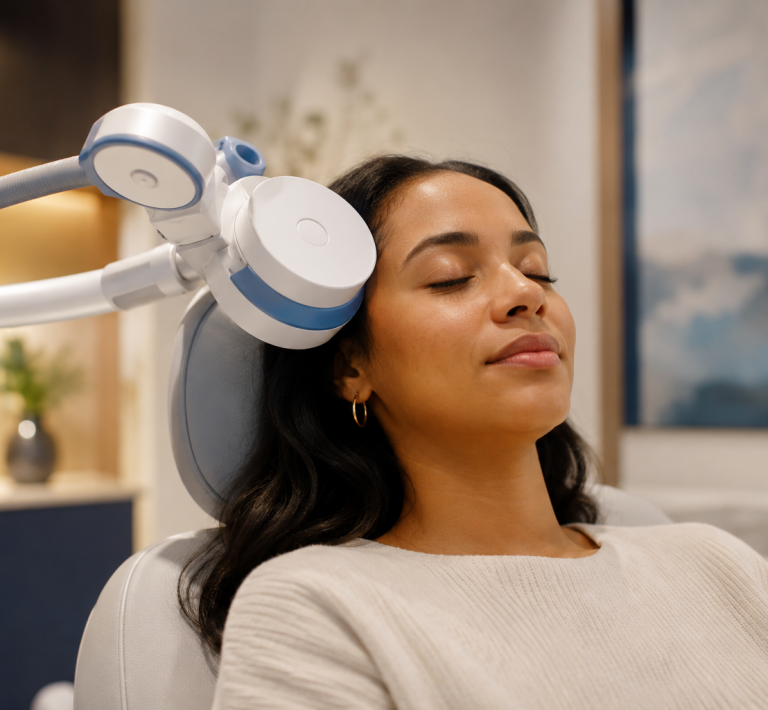
You will sit in a comfortable, reclined chair. A trained TMS technician will position a magnetic coil gently against your scalp, targeting the specific area of your brain being treated. The coil will deliver a series of magnetic pulses.
You may hear a clicking sound and feel a light tapping sensation on your scalp during the pulses. This sensation is normal and does not cause pain for most patients. If any discomfort occurs, the technician can adjust the settings.
A standard TMS session runs approximately 19 to 37 minutes depending on the protocol. NeuPath also offers accelerated TMS formats, including our One-Day TMS option, which compresses the treatment schedule significantly for patients who need faster results or have scheduling constraints.
After the Session
There is no recovery time. You can drive yourself home, return to work, exercise, or go about your day as normal. TMS does not cause sedation, cognitive impairment, or any lingering effects that would limit your activity.
Some patients experience mild scalp tenderness or a light headache after early sessions. This typically resolves within an hour and tends to diminish after the first week of treatment as your scalp adjusts.
Unlike ketamine therapy, which can cause temporary dissociative effects during the session, TMS produces no altered states of consciousness. Patients remain fully alert throughout.
How Many TMS Sessions Do You Need?
A standard TMS course consists of 20 to 36 sessions, typically delivered five days a week over four to six weeks. The frequency matters because TMS works through cumulative stimulation. Each session builds on the last, gradually strengthening the neural pathways being targeted.
Most patients begin to notice improvement somewhere between the second and fourth week of treatment. Some notice changes earlier, others later. The full benefit often continues to develop even after the treatment course ends, as the brain continues to consolidate the changes that were initiated during therapy.
What About Maintenance?
TMS produces lasting results for most patients, but some individuals benefit from periodic maintenance sessions after their initial course. The frequency of maintenance varies by patient, ranging from monthly sessions to a booster course every year or two when symptoms begin to return. One of the advantages of being a patient at NeuPath is that our full range of services is available for both ongoing maintenance and for trying a different approach if your needs change over time.
Is TMS Covered by Insurance?
Yes, TMS therapy is frequently covered by insurance for patients with treatment-resistant depression. Coverage typically requires that a patient has tried at least one or two antidepressant medications without sufficient improvement. Most major insurance plans, including Blue Cross Blue Shield, Aetna, UnitedHealthcare, Cigna, and Medicare, have established coverage policies for TMS.
At NeuPath Mind Wellness, we work directly with insurers to verify your benefits and handle prior authorization before your treatment begins. Our team will walk you through what your plan covers so there are no surprises.
If you are considering both TMS and Spravato, it is worth noting that Spravato is also typically covered by insurance, while ketamine infusion therapy generally is not, since ketamine for depression is an off-label use of an FDA-approved drug. For patients where cost is a factor, TMS and Spravato offer insurance-eligible paths to advanced treatment.
Who Is a Good Candidate for TMS?
TMS is an excellent option for a wide range of patients. You may be a strong candidate if any of the following apply to you:
- You have been diagnosed with depression, anxiety, OCD, or PTSD
- You have tried at least one antidepressant and did not get adequate relief
- You want to avoid medication or reduce how many medications you are taking
- You are sensitive to the side effects of antidepressants
- You are looking for a treatment you can fit into your daily schedule without downtime
- You have had a good response to TMS in the past and want a booster course
Who Is Not a Good Candidate for TMS?
TMS is not appropriate for everyone. Patients with metal implants in or near the skull, such as cochlear implants, deep brain stimulators, or aneurysm clips, are generally not eligible. Patients with a history of seizures require careful evaluation before starting TMS. Your NeuPath psychiatrist will conduct a full screening to ensure TMS is safe for your specific situation.
TMS at NeuPath Mind Wellness
At NeuPath Mind Wellness, TMS is not an afterthought or a secondary offering. It is a core part of how we treat depression, anxiety, OCD, and PTSD, delivered in a clinical environment designed from the ground up to support healing.
Our TMS technicians are experienced, attentive professionals who take the time to understand your experience at each session and make adjustments as needed. The environment itself is designed to be calming: quiet, private, and free from the clinical coldness of a typical hospital or psychiatry office. Many of our patients tell us that their daily TMS session became a reliable anchor in their week.
We offer TMS across all three of our locations, in Delray Beach, Boca Raton, and Boynton Beach, with flexible scheduling to accommodate working patients and those managing family responsibilities. We also offer our One-Day TMS protocol for patients who need results on a compressed timeline.
TMS at NeuPath can be combined with other services, including ketamine therapy, Spravato, medication management, and GeneSight genetic testing, if your psychiatrist determines that a combined approach would serve you better. Our integrated care model means every part of your treatment communicates with every other part, coordinated by the same clinical team under one roof.
Because TMS requires repeated sessions to build its effect, who delivers your treatment matters as much as what the treatment is. The skill, consistency, and environment your TMS clinic provides have a direct impact on your outcomes.
| If you’re considering TMS therapy, NeuPath Mind Wellness in Delray Beach is your best choice for TMS treatment. We encourage you to schedule an appointment by calling us today at 561-847-3662 or request an appointment online. We will conduct a thorough mental health evaluation and discuss your options, which may include TMS therapy. If TMS is recommended by your provider, we will help you decide which type of TMS treatment best suits your needs. We truly believe that TMS treatment at NeuPath Mind Wellness is one of the best ways to treat depression or anxiety in Florida. TMS is available at our convenient location in Delray Beach, within easy driving distance of Boca Raton or Boynton Beach. Contact us today at 561-847-3662 or request an appointment online to schedule a consultation and find out if TMS is right for you. |