
When most people hear that TMS therapy takes four to six weeks of daily sessions, their first reaction is one of two things: relief that there is finally an effective option, or immediate concern about whether they can realistically fit that into their life.
Work schedules, family responsibilities, travel, and the simple logistical reality of five clinic visits per week for over a month can make a standard TMS course genuinely difficult for many patients. For some, it becomes the reason they delay treatment or do not pursue it at all.
One-Day TMS exists to solve that problem.
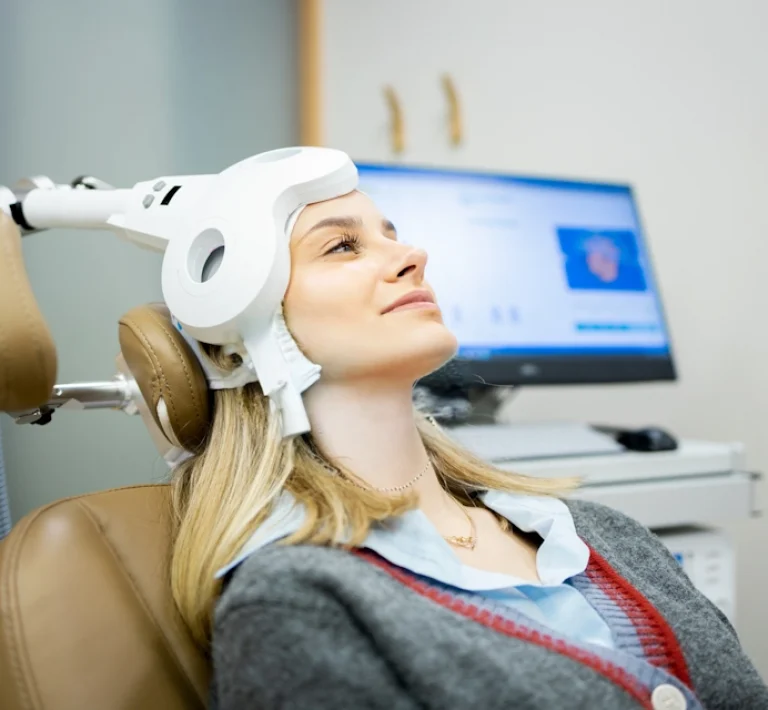
At NeuPath Mind Wellness, we offer an accelerated TMS protocol that compresses a full course of Transcranial Magnetic Stimulation into a single intensive day of treatment. The same FDA-cleared technology. The same therapeutic target. A fraction of the time commitment.
This post explains what One-Day TMS is, how it works, what the research behind it says, and how to know whether you are a good candidate.
What Is One-Day TMS?
One-Day TMS is an accelerated TMS protocol that delivers multiple TMS sessions across a single day with short rest intervals between them. Rather than spreading stimulation across 36 daily sessions over six weeks, the treatment concentrates the therapeutic dose into a condensed format completed in one clinic visit.
The concept is grounded in a growing body of research into accelerated TMS, which has established that the brain does not require 24-hour gaps between stimulation sessions to consolidate the neuroplastic changes TMS produces. What matters is the total cumulative dose of stimulation and the quality of each pulse sequence, not the number of calendar days over which it is delivered.
This research culminated most prominently in the Stanford SAINT protocol, a form of accelerated theta burst TMS developed at Stanford University that delivered multiple TMS sessions per day over five consecutive days. Clinical trials using the SAINT protocol reported response rates as high as 78 to 90 percent in patients with severe treatment-resistant depression, significantly higher than the 50 to 58 percent typically reported for standard TMS protocols.
One-Day TMS takes the same accelerated principle and compresses it further for patients who need results in the shortest possible timeframe.
How Is It Different From Standard TMS?
Standard TMS delivers one session per day, five days a week, for four to six weeks. Each session uses a pulse pattern called repetitive TMS or rTMS, which stimulates the left prefrontal cortex at a fixed frequency over 19 to 37 minutes.
One-Day TMS uses a faster pulse pattern called theta burst stimulation, or TBS. Theta burst delivers the same therapeutic stimulation in a fraction of the time per session, typically three minutes per session rather than 20 to 37. Multiple theta burst sessions are then delivered across the day with short rest intervals in between, allowing the brain to consolidate each round of stimulation before the next begins.
The key differences in practice:
Time commitment. Standard TMS requires six to seven weeks of weekday clinic visits. One-Day TMS requires one day.
Pulse pattern. Standard TMS uses rTMS at 10Hz. One-Day TMS uses intermittent theta burst stimulation, which more closely mimics the brain’s natural rhythms and has shown equivalent or superior outcomes in multiple clinical trials.
Session length. Individual theta burst sessions within a One-Day protocol last approximately three minutes each. Multiple sessions are delivered across the day.
Flexibility. Standard TMS fits best for patients with stable routines who can commit to a fixed daily schedule. One-Day TMS fits best for patients with demanding or unpredictable schedules, frequent travelers, caregivers, and those who want results without a multi-week commitment.
What Does the Research Say?
The evidence behind accelerated TMS protocols is substantial and growing rapidly.
The Stanford SAINT trial, published in the American Journal of Psychiatry in 2022, treated patients with severe treatment-resistant depression using an accelerated theta burst protocol delivering 10 sessions per day over five days. The results were striking: 78.6 percent of patients met criteria for response and 57.1 percent achieved remission. These numbers significantly outperform the historical benchmarks for standard TMS.
A 2023 systematic review and meta-analysis published in Translational Psychiatry analyzed 15 randomized controlled trials of accelerated TMS protocols and concluded that accelerated TMS produced antidepressant effects comparable to or exceeding those of standard TMS, with a faster onset of improvement.
A landmark 2024 non-inferiority trial published in JAMA Psychiatry directly compared standard TMS to accelerated theta burst TMS in a large patient sample and found no significant difference in outcomes between the two approaches, confirming that the compressed format does not sacrifice effectiveness for speed.
The scientific consensus is clear: accelerated TMS works, and in some patient populations it may work better than the standard format.
Who Is a Good Candidate for One-Day TMS?
One-Day TMS is not appropriate for every patient, and your NeuPath psychiatrist will help you determine whether it is the right fit for your specific situation. That said, it tends to be an excellent option for patients who fit one or more of the following profiles:
Patients with demanding schedules. Professionals, business owners, executives, and anyone whose work makes a five-days-a-week clinic commitment genuinely difficult are strong candidates for the compressed format.
Caregivers. Parents of young children, people caring for elderly family members, and others whose daily responsibilities cannot be paused for six weeks often find One-Day TMS the only realistic path to treatment.
Frequent travelers. Patients whose work or lifestyle involves regular travel cannot reliably maintain the consecutive daily schedule that standard TMS requires. One-Day TMS removes that barrier entirely.
Patients who need faster results. While standard TMS produces improvement over four to six weeks, One-Day TMS can initiate a therapeutic response significantly faster. For patients in meaningful distress who want relief as soon as possible without the intensity of IV ketamine, this is a compelling option.
Patients who have previously completed standard TMS. Some patients who responded well to a standard TMS course in the past use One-Day TMS as a maintenance or booster format when symptoms begin to return, rather than committing to another full multi-week course.
Patients who live outside the immediate area. For patients traveling from outside Palm Beach County or from other parts of Florida to access NeuPath’s services, completing treatment in a single visit is a practical necessity rather than just a convenience.
One-Day TMS is a strong fit for patients with demanding work schedules, caregivers, frequent travelers, patients who need faster results, and those who live outside the immediate area and cannot commit to daily clinic visits over six weeks. Your NeuPath psychiatrist will confirm whether it is appropriate for your specific situation.
Yes. Patients who responded well to a previous standard TMS course sometimes use One-Day TMS as a maintenance or booster format when symptoms begin to return, rather than committing to another full multi-week course.
Standard TMS delivers one session per day over four to six weeks. One-Day TMS uses theta burst stimulation to deliver multiple sessions across a single day with short rest intervals between them. The therapeutic target and technology are the same. The time commitment is dramatically shorter.
Yes. A 2024 non-inferiority trial published in JAMA Psychiatry found no significant difference in outcomes between accelerated theta burst TMS and standard TMS. The Stanford SAINT protocol, which uses a similar accelerated format, reported response rates as high as 78 to 90 percent in patients with treatment-resistant depression.
What to Expect on the Day
A One-Day TMS session at NeuPath is a full clinical day, not a casual appointment. Here is what to expect:
Arrive in the morning. Your day begins with a brief check-in with your clinical team to confirm your current symptoms, review any changes since your evaluation, and ensure you are comfortable proceeding.
Multiple sessions with rest intervals. You will complete a series of theta burst stimulation sessions throughout the day. Between sessions you will have structured rest periods during which you can eat, drink, use your phone, read, or simply relax. The rest intervals are clinically important and are built into the protocol intentionally.
You remain fully awake throughout. As with standard TMS, there is no sedation, no anesthesia, and no altered state of any kind. You are alert and comfortable for the entire day.
You leave the same day. When the final session is complete, you are free to go. You can drive yourself home. There is no recovery period, no observation window, and no restriction on your activities for the rest of the evening.
Mild scalp sensitivity is the most common side effect and typically resolves by the following morning. Some patients experience a light headache toward the end of the day that responds well to over-the-counter pain relief.
Is One-Day TMS Covered by Insurance?
Insurance coverage for One-Day TMS is more variable than for standard TMS. Most major insurers have established coverage policies for standard TMS, but accelerated protocols are a newer format and coverage determination varies by plan.
Our team at NeuPath will verify your specific benefits before treatment begins and give you a clear picture of what your plan covers. For patients whose insurance does not cover the accelerated format, we can discuss the cost and explore whether standard TMS with insurance coverage is a better practical fit for your situation.
Coverage varies by plan. Most major insurers have established policies for standard TMS, but accelerated protocols are newer and coverage determination differs across plans. NeuPath will verify your specific benefits before treatment begins so there are no surprises.
Cost depends on your insurance coverage and specific treatment plan. Contact our team at NeuPath Mind Wellness and we will verify your benefits and provide a full cost breakdown before you commit to anything.
Yes. One-Day TMS causes no sedation, no cognitive impairment, and no altered state. You can drive yourself home at the end of the day and resume normal activities immediately.
One-Day TMS is available at NeuPath Mind Wellness across all three of our South Florida locations in Delray Beach, Boca Raton, and Boynton Beach.
One-Day TMS and NeuPath’s Integrated Care Model
One of the advantages of receiving One-Day TMS at NeuPath rather than at a standalone TMS provider is access to our full range of complementary services under one roof.
If your One-Day TMS course produces a strong initial response that begins to fade over time, your psychiatrist can recommend ketamine therapy or Spravato as a maintenance strategy without referring you elsewhere. If genetic testing through GeneSight reveals pharmacogenomic factors that have been working against your treatment response, that information can be incorporated into your ongoing care plan immediately. Your TMS results do not exist in isolation from the rest of your mental health treatment.
That continuity of care, with the same clinical team overseeing every aspect of your treatment, is something that a specialist-only TMS clinic cannot offer.
| The Bottom Line One-Day TMS is not a shortcut. It is a clinically validated, research-backed format for delivering a full course of TMS therapy in a way that works for patients whose lives do not fit neatly into a six-week daily schedule. The research is clear that it works. The patient population who benefits from it is large and underserved. And at NeuPath Mind Wellness, it is available now across our South Florida locations. If you have been holding off on TMS because the time commitment felt impossible, One-Day TMS may be the answer you have been looking for. Book a free consultation at NeuPath Mind Wellness in Delray Beach, Boca Raton, or Boynton Beach. |