







Discover a new path to Mental Health and Wellness

TMS, Ketamine therapy, Spravato, and mental health services located in Delray Beach

Discover a new path to Mental Health and Wellness

Ketamine therapy, Spravato, and mental health services located in Delray Beach

ELEVATED MENTAL HEALTH CARE IN DELRAY BEACH

NeuPath Mind Wellness is a modern mental health practice located in the heart of Delray Beach. We provide advanced mental health services for depression, anxiety, PTSD, and other mental health conditions in a calm, supportive environment designed for real healing.

Our psychiatry practice offers Ketamine Therapy, Spravato®, TMS, and comprehensive medication management — helping patients find rapid relief while building the foundation for lasting mental wellness. Every treatment plan is personalized to your unique goals and needs, because meaningful change begins with care that truly sees you.

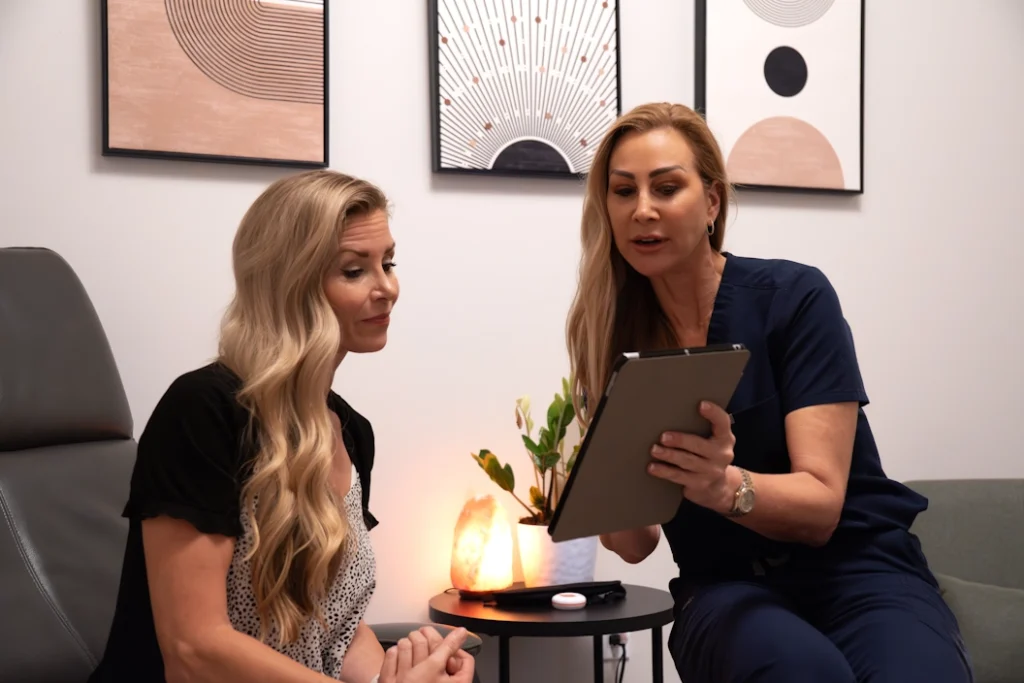
A patient listens as a staff member explains ketamine therapy at NeuPath Mind Wellness

OUR SERVICES

KETAMINE TREATMENT

Our ketamine treatment combines the highest levels of medically supervised care and safety with a warm, nurturing environment that accentuates comfort and healing. Our team will guide you through a knowledge-filled, self-discovery, and awareness journey built on trust, spirituality and connection.

SPRAVATO TREATMENT

Spravato is a nasal spray form of ketamine used to treat depression, anxiety, PTSD and suicidal ideation. Spravato is covered by insurance and provides fast relief from depression and other mental health conditions. Spravato is administered in our Delray Beach ketamine clinic under the highest standards of medically supervised care to accentuate comfort and healing. Spravato may also be combined with other services, such as TMS or psychiatric medication management

INTEGRATIVE MENTAL HEALTH AND PSYCHIATRIC SERVICES

From medication management to psychotherapy our mental health psychiatric treatment plans are end-to-end and leverage in-house services such as hormone therapy optimization, vitamin and nutrient IVs, medical weight loss, redlight/vibroacoustic therapies to optimize your results and minimize unnecessary medications. NeuPath’s mental health and psychiatric team has over 50-years of experience in diagnosing and creating specialized treatment programs for a variety of conditions.

TMS THERAPY

TMS is an innovative treatment for depression, anxiety, PTSD, and OCD that is completly medication-free. TMS directly targets areas of the brain associated with depression and mood regulation to achieve long-lasting healing. It is FDA approved with a large body of scientific research and clinical results demonstrating its powerful effectiveness at healing. TMS is typically covered by insurance.

WELLNESS THAT WORKS

woman with hand on chest

THE NEUPATH MIND WELLNESS DIFFERENCE

The innovative psychiatric treatments we offer are only part of the healing formula. Where you receive care matters almost as much as the care you receive.

Our beautiful, spa-like clinic in Delray Beach helps accelerate the healing process. The way you are greeted by our care team, and the way you are listened to intently by your care provider are important parts of the healing journey. Above all, your experience at NeuPath Mind Wellness is designed to provide you with the support and tools you need to restore your positive self.

We opened our ketamine clinic in Delray Beach to provide the type of care that has helped thousands of patients find healing from depression, anxiety, PTSD, and more. With the addition of Spravato and TMS therapy, we continue to evolve to meet our patients’ needs. Having multiple options under one roof provides you with the exact care you need from a provider you trust.

You’ll see from the moment you walk through our door that there is something different at NeuPath Mind Wellness. Please join us and see for yourself!

neupath-hero
lynne-nash-2

iNSURANCE aCCEPTED

NeuPath Mind Wellness accepts most of the major commercial medical insurance in Florida, along with Medicare and Humana Military/Tricare. We are in network with Aetna, AvMed, Blue Cross Blue Shield, Cigna, Oscar, United Healthcare, Tricare, and Medicare.

RESOURCES AND NEWS

One-Day TMS: Can You Really Treat Depression in a Single Day?

When most people hear that TMS therapy takes four to six weeks of daily sessions, their first reaction is one of two things: relief that there is finally an effective option, or immediate concern about whether they can realistically fit that into their life. Work schedules, family responsibilities, travel, and the simple logistical reality of five clinic visits per week for over a month can make a standard TMS course genuinely difficult for many patients. For some, it becomes the reason they delay treatment or do not pursue it at all. One-Day TMS exists to solve that problem. At NeuPath Mind Wellness, we offer an accelerated TMS protocol that compresses a full course of Transcranial Magnetic Stimulation into a single intensive day of treatment. The same FDA-cleared technology. The same therapeutic target. A fraction of the time commitment. This post explains what One-Day TMS is, how it works, what the research behind it says, and how to know whether you are a good candidate. What Is One-Day TMS? One-Day TMS is an accelerated TMS protocol that delivers multiple TMS sessions across a single day with short rest intervals between them. Rather than spreading stimulation across 36 daily sessions over six weeks, the treatment concentrates the therapeutic dose into a condensed format completed in one clinic visit. The concept is grounded in a growing body of research into accelerated TMS, which has established that the brain does not require 24-hour gaps between stimulation sessions to consolidate the neuroplastic changes TMS produces. What matters is the total cumulative dose of stimulation and the quality of each pulse sequence, not the number of calendar days over which it is delivered. This research culminated most prominently in the Stanford SAINT protocol, a form of accelerated theta burst TMS developed at Stanford University that delivered multiple TMS sessions per day over five consecutive days. Clinical trials using the SAINT protocol reported response rates as high as 78 to 90 percent in patients with severe treatment-resistant depression, significantly higher than the 50 to 58 percent typically reported for standard TMS protocols. One-Day TMS takes the same accelerated principle and compresses it further for patients who need results in the shortest possible timeframe. How Is It Different From Standard TMS? Standard TMS delivers one session per day, five days a week, for four to six weeks. Each session uses a pulse pattern called repetitive TMS or rTMS, which stimulates the left prefrontal cortex at a fixed frequency over 19 to 37 minutes. One-Day TMS uses a faster pulse pattern called theta burst stimulation, or TBS. Theta burst delivers the same therapeutic stimulation in a fraction of the time per session, typically three minutes per session rather than 20 to 37. Multiple theta burst sessions are then delivered across the day with short rest intervals in between, allowing the brain to consolidate each round of stimulation before the next begins. The key differences in practice: Time commitment. Standard TMS requires six to seven weeks of weekday clinic visits. One-Day TMS requires one day. Pulse pattern. Standard TMS uses rTMS at 10Hz. One-Day TMS uses intermittent theta burst stimulation, which more closely mimics the brain’s natural rhythms and has shown equivalent or superior outcomes in multiple clinical trials. Session length. Individual theta burst sessions within a One-Day protocol last approximately three minutes each. Multiple sessions are delivered across the day. Flexibility. Standard TMS fits best for patients with stable routines who can commit to a fixed daily schedule. One-Day TMS fits best for patients with demanding or unpredictable schedules, frequent travelers, caregivers, and those who want results without a multi-week commitment. What Does the Research Say? The evidence behind accelerated TMS protocols is substantial and growing rapidly. The Stanford SAINT trial, published in the American Journal of Psychiatry in 2022, treated patients with severe treatment-resistant depression using an accelerated theta burst protocol delivering 10 sessions per day over five days. The results were striking: 78.6 percent of patients met criteria for response and 57.1 percent achieved remission. These numbers significantly outperform the historical benchmarks for standard TMS. A 2023 systematic review and meta-analysis published in Translational Psychiatry analyzed 15 randomized controlled trials of accelerated TMS protocols and concluded that accelerated TMS produced antidepressant effects comparable to or exceeding those of standard TMS, with a faster onset of improvement. A landmark 2024 non-inferiority trial published in JAMA Psychiatry directly compared standard TMS to accelerated theta burst TMS in a large patient sample and found no significant difference in outcomes between the two approaches, confirming that the compressed format does not sacrifice effectiveness for speed. The scientific consensus is clear: accelerated TMS works, and in some patient populations it may work better than the standard format. Who Is a Good Candidate for One-Day TMS? One-Day TMS is not appropriate for every patient, and your NeuPath psychiatrist will help you determine whether it is the right fit for your specific situation. That said, it tends to be an excellent option for patients who fit one or more of the following profiles: Patients with demanding schedules. Professionals, business owners, executives, and anyone whose work makes a five-days-a-week clinic commitment genuinely difficult are strong candidates for the compressed format. Caregivers. Parents of young children, people caring for elderly family members, and others whose daily responsibilities cannot be paused for six weeks often find One-Day TMS the only realistic path to treatment. Frequent travelers. Patients whose work or lifestyle involves regular travel cannot reliably maintain the consecutive daily schedule that standard TMS requires. One-Day TMS removes that barrier entirely. Patients who need faster results. While standard TMS produces improvement over four to six weeks, One-Day TMS can initiate a therapeutic response significantly faster. For patients in meaningful distress who want relief as soon as possible without the intensity of IV ketamine, this is a compelling option. Patients who have previously completed standard TMS. Some patients who responded well to a standard TMS course in the past use One-Day TMS as a maintenance or booster

MORE
How Many TMS Sessions Do You Need for Depression?

If you are considering TMS therapy for depression, one of the first practical questions you will ask is how long it actually takes. How many sessions? How often? How many weeks out of your life are we talking about? These are the right questions to ask before you commit, and the answers are more straightforward than you might expect. This post covers everything you need to know about TMS session numbers, frequency, duration, and what happens after your initial course ends. The Standard TMS Course A standard TMS course for depression consists of 36 sessions delivered five days a week, Monday through Friday, over approximately six to seven weeks. Some protocols are slightly shorter, running 20 to 30 sessions over four to five weeks, depending on the specific TMS system being used and your psychiatrist’s clinical judgment. The five-days-a-week frequency is not arbitrary. TMS works through neuroplasticity, the process by which the brain builds and strengthens neural connections through repeated stimulation. Consistent, frequent sessions are what drive that process forward. Spacing sessions too far apart reduces the cumulative effect and diminishes outcomes. Each individual session runs between 19 and 37 minutes depending on the protocol. You arrive, sit in the treatment chair, complete the session, and leave. No recovery time, no downtime, no disruption to the rest of your day. Why the Number of Sessions Varies Not every TMS course looks identical. Several factors influence how many sessions your psychiatrist recommends: The TMS system and protocol. Different FDA-cleared TMS devices use different pulse patterns and frequencies. The NeuroStar system, for example, uses a standard protocol of 36 sessions. Brainsway Deep TMS uses a similar course length. Newer theta burst stimulation protocols can deliver equivalent therapeutic effects in sessions as short as three minutes, which is why accelerated formats have become increasingly viable. Your diagnosis and symptom severity. Patients with more severe or longstanding depression may benefit from a full 36-session course rather than a shorter one. Patients whose symptoms begin responding early may reach remission before the course is complete, though most psychiatrists recommend completing the full course regardless to consolidate the gains. Your response to previous treatments. Patients who have tried multiple antidepressants without success, the classic treatment-resistant profile, sometimes benefit from a longer initial course or a higher stimulation intensity compared to patients who are trying TMS as a first alternative to medication. Whether you are combining TMS with other treatments. At NeuPath, some patients receive TMS alongside ketamine therapy or Spravato as part of an integrated treatment plan. The combination can influence the optimal TMS course length. When Will You Start Feeling Better? This is the question behind the question for most patients. The session count matters partly because it tells you how long you will be waiting to feel relief. The honest answer is that TMS improvement is gradual and builds over the course of treatment rather than arriving suddenly. Here is a general timeline based on what most patients experience: Weeks one and two. Most patients notice little to no change during this period. The brain is beginning to respond to stimulation but the changes are not yet clinically meaningful. This is normal and expected. It does not mean the treatment is not working. Weeks three and four. This is where most patients begin to notice something. Sleep often improves first. The flat, heavy quality of depression may begin to lift slightly. Motivation or energy may return in small increments. Some patients notice that their mood is a little more variable, which after a long period of flat depression can itself feel significant. Weeks five and six. For patients who will respond to TMS, meaningful improvement is typically evident by this point. Depressive symptoms are measurably reduced. Some patients reach full remission within the standard course. After the course ends. TMS results continue to develop even after treatment concludes. The neuroplastic changes initiated during the course consolidate over the following weeks and months. Many patients report that their best outcomes came four to six weeks after their final session. What If You Do Not Respond Within the Standard Course? Not every patient responds to a standard TMS course, and it is important to know what options exist if that happens to you. Extended courses. Some psychiatrists recommend additional sessions beyond the standard 36 if a patient is showing partial improvement but has not yet reached an adequate response. Insurance coverage for extended courses varies by plan and requires clinical justification. Protocol adjustments. If your initial course used a standard TMS protocol without sufficient response, switching to a deep TMS protocol or a theta burst stimulation format may produce different results. The two approaches stimulate the brain differently and some patients respond better to one than the other. Combination approaches. At NeuPath, patients who have a partial TMS response sometimes move to ketamine therapy or Spravato to build on the gains TMS has initiated. The two treatments work through different mechanisms and can complement each other in ways that neither achieves alone. Re-evaluation. Sometimes a lack of response points to a need for a fuller diagnostic picture. GeneSight genetic testing, available at NeuPath, can identify whether there are pharmacogenomic factors affecting your response to both medications and treatments, and help your psychiatrist refine the overall approach. What About Maintenance Sessions? TMS produces durable results for most patients, but depression is a chronic condition for many people and symptoms can return over time. Maintenance TMS is a recognized and commonly used strategy for sustaining the benefits of an initial course. Maintenance looks different for different patients. Some people return for a booster course of 5 to 10 sessions once or twice a year when they notice early warning signs of a relapse. Others do a monthly maintenance session as a preventive measure. There is no single standard protocol for maintenance, and the right approach depends on your individual history and how your depression tends to behave over time. The practical advantage of maintenance TMS over maintenance

MORE
What to Expect During Your First TMS Therapy Session

Starting any new medical treatment comes with questions. What will it feel like? How long does it take? Will it hurt? What happens if I react badly? These are completely reasonable things to wonder about, and for most people considering TMS therapy, the uncertainty around the experience itself is one of the biggest barriers to taking the first step. The good news is that TMS is one of the most straightforward treatment experiences in modern psychiatry. No anesthesia, no recovery time, no altered states, and no need to clear your schedule around it. Most patients tell us that after their first session, the main thing they feel is relief that it was so much simpler than they expected. This post walks you through exactly what happens, from the moment you arrive to the moment you leave, so there are no surprises. Before Your First Session: The Initial Evaluation TMS does not begin on the first day you walk in. Before any treatment starts, you will have a full psychiatric evaluation with one of our NeuPath clinicians. This is not a formality. It is a genuinely important step that shapes everything that follows. During this evaluation your psychiatrist will review your full psychiatric history, including previous diagnoses, medications you have tried, and how your symptoms have evolved over time. They will also screen for any contraindications to TMS, the most important of which is metal implants in or near the skull, such as cochlear implants, deep brain stimulators, or aneurysm clips. Dental fillings, braces, and joint replacements elsewhere in the body are not a concern. You do not need to fast beforehand. You do not need to stop any medications unless your psychiatrist specifically advises it. You do not need to arrange for anyone to drive you. You can come in, have the evaluation, and drive yourself home afterward exactly as you would after any other medical appointment. If you are also being considered for insurance coverage, this evaluation is where the clinical documentation that supports your prior authorization begins. Mapping Your Brain: The Motor Threshold Test On your first actual treatment session, before the coil delivers a single therapeutic pulse, your technician will perform what is called a motor threshold test. This sounds technical but is completely painless and takes only a few minutes. The motor threshold test determines the precise level of magnetic stimulation your brain responds to. Everyone’s brain is slightly different, and the dose of TMS needs to be calibrated to your individual neurology rather than applied at a fixed setting. To find your threshold, the technician positions the coil over the area of your scalp that corresponds to the motor cortex, the region that controls hand movement, and gradually increases the pulse intensity until your thumb or fingers produce a small, involuntary twitch. That twitch is the signal. It tells your technician exactly how much magnetic stimulation your brain needs to respond, and your therapeutic dose is then calculated as a percentage of that threshold. The result is a precisely personalized treatment, not a one-size-fits-all setting. This calibration is repeated periodically throughout your treatment course if your hair length changes significantly, since even a few centimeters of additional distance between the coil and your scalp can affect the dose. The Treatment Session Itself Once your threshold is mapped, the actual treatment begins. Here is what the experience looks like from start to finish. You sit in a comfortable chair. The TMS chair is reclined like a dentist’s chair but considerably more comfortable. You remain fully clothed. There is nothing to change into and nothing attached to your body. The coil is positioned against your scalp. Your technician places the TMS coil, a device roughly the size and shape of a figure-eight paddle, gently against the left side of your head. It rests on the surface of your scalp and does not apply pressure or cause any discomfort at the point of contact. The pulses begin. You will hear a rapid clicking or tapping sound as the coil activates. Simultaneously you will feel a light tapping sensation on your scalp in the area where the coil is positioned. Most patients describe it as a woodpecker-like sensation, rhythmic and localized. It is not painful for most people, though it can feel unfamiliar or slightly intense in the first couple of sessions before you adjust to it. You stay fully awake and alert. There is no sedation, no medication administered, and no altered state of any kind. You can listen to music, watch something on your phone, or simply sit quietly. Some patients use the time to meditate. Others catch up on podcasts. The session does not require your active participation beyond sitting still. The session ends. A standard TMS session runs between 19 and 37 minutes depending on the protocol being used. NeuPath also offers accelerated TMS formats including our One-Day TMS option for patients who need a compressed timeline. When the session is complete, the coil is removed, you stand up, and you leave. That is the full experience. What You Might Feel During the Session The most common sensations during TMS are: Scalp tapping. The magnetic pulses create a rhythmic tapping feeling on the skin directly under the coil. This is the most universal part of the experience and diminishes noticeably after the first week as your scalp adjusts. Jaw or facial muscle movement. Some patients notice subtle, involuntary twitching in the jaw or facial muscles during certain pulse sequences. This is normal, harmless, and typically reduces as the technician fine-tunes the coil position. A mild headache. Some patients, particularly in the first few sessions, develop a light tension headache that resolves within an hour or so after the session. Over-the-counter pain relief works fine if needed. This side effect tends to fade after the first week. What you will not feel: dizziness, nausea, sedation, cognitive impairment, or anything that would prevent you from driving, working, or carrying on with your day. TMS has no

MORE

SCHEDULE A CONSULTATION

Visit our flagship center in Delray Beach, Florida.  Fill out the form below to book with us.