Online Ketamine vs. In-Person Ketamine: Why Clinic-Based Care Matters
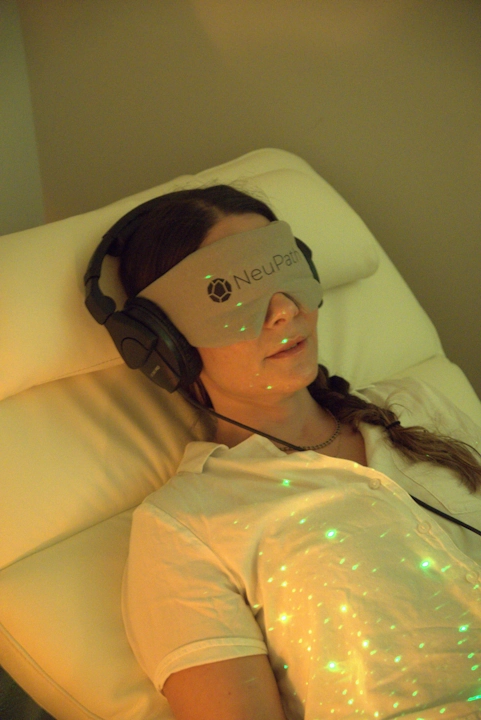
Over the last few years, a new category of mental health service has emerged: online ketamine therapy. Companies like Mindbloom, Joyous, and others now offer ketamine treatment that can be prescribed remotely and taken at home, without a clinic visit, without medical supervision during the session, and without the oversight of a psychiatrist who knows your full history. For patients who have been struggling with depression and are looking for any path forward, the appeal is understandable. It is accessible, relatively affordable, and does not require you to leave your house. But the convenience comes with trade-offs that are worth understanding clearly before you make a decision. This post lays out exactly how online and in-person ketamine differ, where each approach has merit, and why for most patients dealing with serious depression, clinic-based care at a practice like NeuPath Mind Wellness produces meaningfully better outcomes. What Online Ketamine Actually Is Online ketamine services operate through a telehealth model. A patient completes an intake form and a brief virtual consultation with a prescribing clinician, often a nurse practitioner rather than a psychiatrist, and if approved receives a prescription for oral or sublingual ketamine lozenges that are mailed to their home. The patient then takes the ketamine at home, typically alone or with a friend or partner, without any clinical monitoring during the session. Some platforms provide a virtual companion or therapist to check in before and after, but the session itself is unsupervised. The ketamine used in these models is almost always oral or sublingual, meaning it is swallowed or dissolved under the tongue. This form of administration has significantly lower bioavailability than intravenous ketamine, meaning a much smaller proportion of the drug actually reaches the brain. The dissociative experience is milder, the therapeutic effect is less predictable, and the dosing is less precise. What In-Person Ketamine at NeuPath Looks Like At NeuPath Mind Wellness, ketamine therapy is administered intravenously under direct medical supervision in a calm, private clinical environment. IV ketamine delivers the drug directly into the bloodstream at a precisely controlled rate, producing consistent plasma concentrations and a predictable, clinically meaningful therapeutic effect. The session is monitored throughout by trained clinical staff who track your vital signs, adjust the infusion rate as needed, and are present for the entirety of the experience. Your treatment at NeuPath is overseen by a psychiatrist who knows your full history, your diagnosis, your medication background, and your treatment goals. Dosing decisions are made by that psychiatrist based on your individual response, not by a remote prescriber who spent fifteen minutes reviewing your intake form. Before your first infusion, you have a comprehensive psychiatric evaluation. After each session, your response is assessed and your treatment plan is adjusted accordingly. The ketamine does not exist in isolation from the rest of your care. The Key Differences Bioavailability and Therapeutic Effect This is the most clinically significant difference between the two models. IV ketamine has near-complete bioavailability. When delivered intravenously, essentially all of the drug reaches systemic circulation and crosses the blood-brain barrier at the intended concentration. The therapeutic effect is consistent, predictable, and well-documented across decades of clinical research. Oral and sublingual ketamine have bioavailability of approximately 20 to 30 percent. The majority of the drug is broken down in the digestive tract and liver before it reaches the brain. What arrives at the target site is a fraction of the administered dose, at concentrations that are harder to predict and control. This difference matters clinically. The robust antidepressant effects documented in ketamine research are based almost entirely on intravenous administration. Extrapolating those results to oral formulations requires assumptions that the evidence does not yet fully support. Medical Supervision and Safety Ketamine is a dissociative anesthetic. During an infusion, patients experience altered states of perception, changes in sense of time and space, and in some cases intense emotional or psychological experiences. These effects are transient and resolve after the session, but they require clinical oversight. At NeuPath, a trained clinician is present throughout every infusion. Vital signs are monitored continuously. If a patient experiences cardiovascular changes, significant distress, or an unexpected reaction, the clinical team responds immediately. Taking ketamine at home alone removes that safety net entirely. The risk is not theoretical. Ketamine affects blood pressure and heart rate, can cause nausea and vomiting in some patients, and produces psychological experiences that can be disorienting or distressing without appropriate support. Unsupervised use in a home environment introduces risks that supervised clinical administration does not. Psychiatric Oversight Perhaps the most underappreciated difference between online and in-person ketamine is the quality of the clinical relationship overseeing the treatment. Online ketamine platforms are primarily prescription services. The clinical relationship is thin by design. A brief telehealth consultation, often with a non-psychiatrist prescriber, is not equivalent to a comprehensive psychiatric evaluation with a clinician who understands the full complexity of your depression, your comorbidities, your medication history, and your treatment goals. At NeuPath, your ketamine treatment is embedded within a broader psychiatric care relationship. Your psychiatrist monitors your response over the course of treatment, identifies when a different approach might serve you better, and coordinates your ketamine care with any other treatments you are receiving, including TMS, Spravato, or GeneSight-informed medication management. That coordination is not possible in a model where the prescriber met you once on a video call. Integration With Other Treatments For many patients, ketamine works best as part of a broader treatment strategy rather than as a standalone intervention. The neuroplastic window that ketamine opens, the period immediately following an infusion when the brain is particularly receptive to new learning and connection, is an opportunity that can be amplified by therapy, by TMS, or by other supportive interventions. At NeuPath, we can combine ketamine with TMS therapy, Spravato, and psychiatric medication management in a coordinated plan. Online ketamine platforms offer none of this. The ketamine is the product, and the clinical relationship ends there. Where Online Ketamine Has a Role This post is not