

If an SSRI has not given you the relief you hoped for, you have probably started to wonder about ketamine. The two are often described as opposites: one slow and familiar, the other fast and newer. The reality is more nuanced, and understanding the differences can help you have a better conversation with your psychiatrist.
This post compares ketamine and SSRIs across the factors that matter most to patients, including how they work, how quickly, how well, with what side effects, and at what cost.
A quick note before we begin: this comparison is for education. Never stop or change an antidepressant on your own. Doing so can cause withdrawal symptoms and relapse, and any change should be planned with your psychiatrist.
How They Work
SSRIs (selective serotonin reuptake inhibitors) such as sertraline, escitalopram, and fluoxetine increase the availability of serotonin in the brain. Over weeks, this appears to trigger downstream changes in neuroplasticity that lift mood.
Ketamine works through a different system entirely. It acts on glutamate signaling by blocking NMDA receptors, which triggers a rapid increase in synaptic connections in mood-regulating regions of the brain. It does not rely on the serotonin system, which is why it can help patients who have not responded to SSRIs.
Speed of Relief
SSRIs typically take four to six weeks to produce their full effect, and some patients need longer.
Ketamine can produce a noticeable improvement within hours to a couple of days. For someone in significant distress, that difference can matter enormously.
Effectiveness
SSRIs help many people. But roughly one in three patients does not reach remission with a first antidepressant, and a meaningful number do not respond to several in a row.
Ketamine has been studied specifically in treatment-resistant depression, where it has produced response in a substantial share of patients who failed multiple medications. It is not a guarantee, and effects can fade without maintenance treatment, but its mechanism gives it a clear role when serotonin-based treatment has fallen short.
SSRIs increase serotonin availability and take four to six weeks to work. Ketamine acts on the glutamate system and can produce relief within hours to days, which is why it is used for patients who have not responded to standard antidepressants.
Neither is better for everyone. SSRIs are a reasonable first-line option. Ketamine is most useful when multiple antidepressants have failed, when faster relief is needed, or when side effects make SSRIs hard to tolerate.
Ketamine works through a different brain system. By acting on glutamate rather than serotonin, it can restore synaptic connections in patients whose depression does not respond to serotonin-based treatment.
Ketamine can produce noticeable improvement within hours to a couple of days. SSRIs typically take four to six weeks to reach their full effect.
Side Effects
Common SSRI side effects include nausea, sleep changes, weight gain, sexual side effects, and emotional blunting. Stopping suddenly can cause discontinuation symptoms.
Common ketamine side effects are mostly short-lived and tied to the session: a dissociative or dreamlike feeling, dizziness, nausea, and temporary increases in blood pressure. These typically resolve within hours. Ketamine does not cause the ongoing weight gain or sexual side effects associated with many SSRIs, though it is not appropriate for everyone and requires medical screening.
The Day-to-Day Experience
An SSRI is a pill you take at home each day.
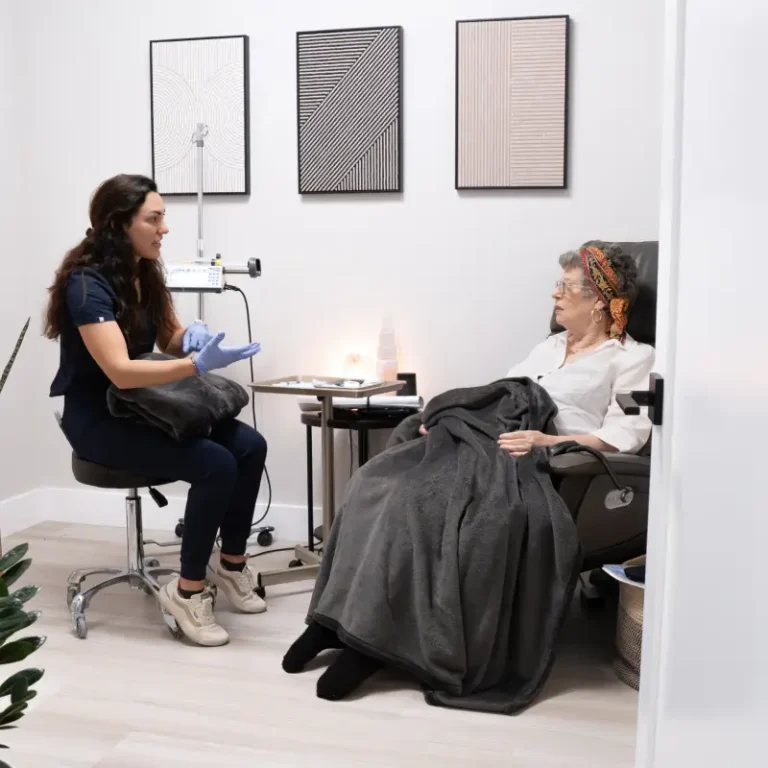
Ketamine is delivered in a supervised clinic. An IV infusion takes roughly 40 to 60 minutes with monitoring and a recovery period, and you cannot drive yourself home afterward. A standard initial course is six infusions over two to three weeks, followed by maintenance as needed.
Cost and Insurance
SSRIs are inexpensive and almost always covered.
IV ketamine is generally not covered by insurance because it is used off-label, so it is typically an out-of-pocket cost. Spravato, the FDA-approved nasal spray form of esketamine, is typically covered and is often the more accessible route for patients who want this mechanism through insurance.
At a Glance
| Factor | SSRIs | Ketamine |
|---|---|---|
| Mechanism | Serotonin system | Glutamate system |
| Speed | 4 to 6 weeks | Hours to days |
| Best for | First-line treatment | Treatment-resistant depression |
| Setting | At home | Supervised clinic |
| Insurance | Almost always covered | IV generally not covered; Spravato typically covered |
Can You Use Both?
Often, yes. Many patients continue an SSRI while receiving ketamine or Spravato, and some patients use ketamine to get relief while a medication change takes effect. Whether this makes sense for you depends on your history and your current medications, which is why a psychiatrist should guide the decision.
GeneSight genetic testing can also help identify which medications are best matched to your biology, reducing the trial and error that leads many patients to look at ketamine in the first place.
Often yes. Many patients continue their antidepressant during ketamine or Spravato treatment. Your psychiatrist will review your medications and decide what is appropriate for you.
Not on your own. Stopping an antidepressant suddenly can cause withdrawal symptoms and relapse. Any change should be planned with your psychiatrist.
IV ketamine is generally not covered because it is used off-label. Spravato, the FDA-approved esketamine nasal spray, is typically covered by most major insurance plans.
NeuPath Mind Wellness offers ketamine therapy at locations in Delray Beach, Boca Raton, and Boynton Beach. Free consultations are available without a referral.
| Which Is Right for You? |
|---|
| SSRIs remain a reasonable first step for many people. Ketamine becomes worth discussing when you have tried more than one antidepressant without adequate relief, when you need faster relief, or when side effects have made SSRIs difficult to tolerate. At NeuPath Mind Wellness, we offer ketamine, Spravato, TMS, GeneSight testing, and medication management at our locations in Delray Beach, Boca Raton, and Boynton Beach, so your plan can be built around you rather than around a single treatment. |
| Book a free consultation to talk through your options. |